
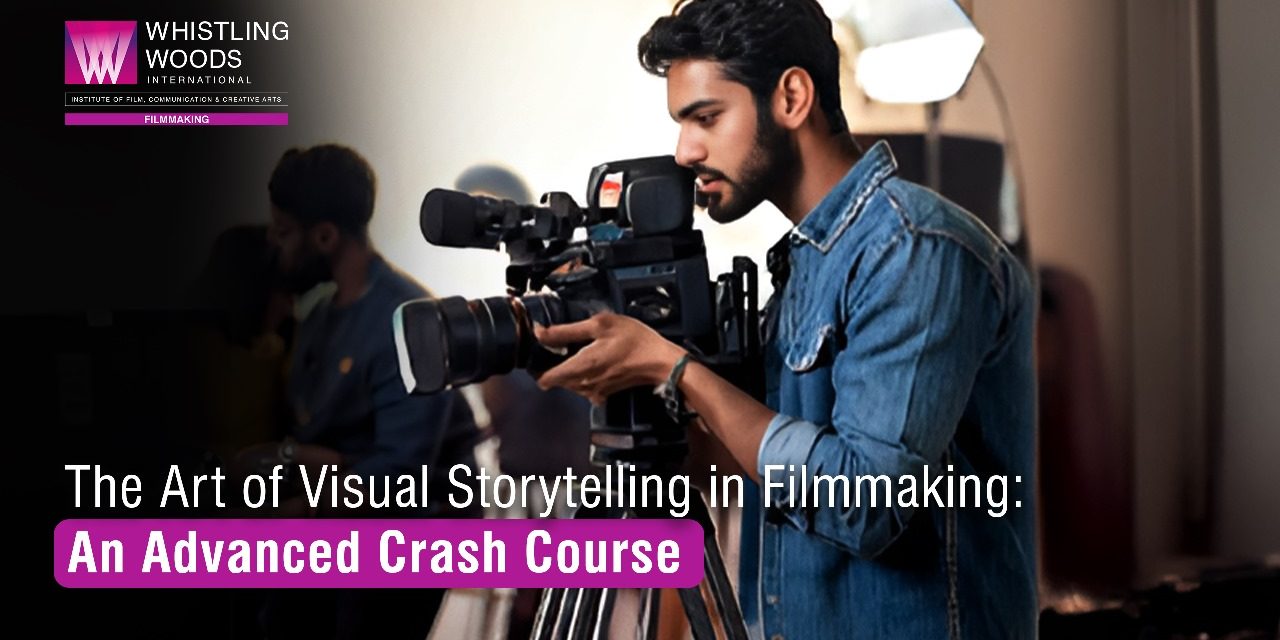
Visual storytelling is the art of conveying narratives through visual elements in film and other media. By mastering these elements, filmmakers can “show, don’t tell,” creating powerful narratives that resonate with audiences on an emotional level. Visual storytelling is especially crucial in filmmaking as it leverages the medium’s unique ability to combine moving images, sound, and editing to craft immersive experiences.
Are you ready to take your filmmaking skills to the next level? Let’s explore the various advanced techniques used by professionals in the industry. This knowledge will help you create more compelling and visually striking films.
Composition and Framing
Mastering composition is crucial in film making courses. It goes beyond the basic rule of
thirds. Advanced filmmakers use techniques like:
Dynamic Symmetry
This technique uses geometric shapes to create balanced and visually pleasing shots. It’s often used in film schools in Mumbai to teach advanced framing.
Leading Lines
These are lines within the frame that guide the viewer’s eye to important elements. Many filmmaking courses in India emphasise this technique for creating depth.
Negative Space
This refers to the empty space around the main subject. It can create powerful visual effects and is a key topic in film courses.
Colour Theory in Cinematography
Colour plays a crucial role in setting mood and conveying themes. Film making courses in Mumbai, like the one offered at Whistling Woods International, often dedicate entire modules to colour theory.
Here’s why:
● Warm colours (reds, oranges) can evoke passion or danger
● Cool colours (blues, greens) often represent calm or melancholy
For example, Vittorio Storaro’s work in “Apocalypse Now” (1979) demonstrates how colour can represent different psychological states and narrative themes.
Advanced Camera Techniques
-
Long Takes and Steadicam
Long, unbroken shots can create a sense of immediacy and realism. The opening scene of “Touch of Evil” (1958) features a legendary 3-minute, 20-second unbroken tracking shot. Steadicam technology revolutionised smooth camera movement. It was first prominently used in “The Shining” (1980). Many film making courses now include Steadicam training.
-
Depth of Field Manipulation
Controlling depth of field allows filmmakers to direct audience attention. For instance: Shallow depth of field creates intimacy or isolation.
-
Deep focus allows for complex compositions
Orson Welles’ “Citizen Kane” (1941) is famous for its use of deep focus. It’s often studied in film schools in Mumbai and across India.
Post-Production Innovations
Visual Effects (VFX)
Modern VFX techniques have expanded creative possibilities. They’re a key component of many filmmaking courses in India. These techniques include:
● CGI for creating detailed digital environments and characters
● Compositing to merge live-action with digital elements
● Motion capture for lifelike digital character movements
Sound Design
Sound design is crucial in creating immersive experiences. It’s an important part of film courses. Sound design involves:
● Layering audio elements
● Creating realistic ambient sounds
● Using sound to enhance emotional impact
The Collaborative Nature of Filmmaking
Filmmaking is inherently collaborative. Understanding team roles is crucial. This knowledge is emphasised in film making courses. Key roles include:
Director of Photography (DoP)
The DoP is responsible for the visual style and lighting of the film. They work closely with the director to achieve the desired look.
Gaffer
The gaffer manages the electrical department. They work closely with the DP on lighting setups. This role is often explored in depth in film making courses.
Camera Operators
Camera operators capture footage according to the DP’s vision. They need to be skilled in various camera techniques.
Advanced Lighting Techniques
Lighting is a crucial element in filmmaking. It’s a major focus in film schools in Mumbai and other institutions. Some advanced techniques include:
Chiaroscuro Lighting
This technique uses strong contrasts between light and dark. It creates dramatic effects and is often used in noir films.
Practical Lighting
This involves using light sources that appear in the shot, like lamps or candles. It can create a more natural, realistic look.
Colour Gels
These are coloured filters placed over lights to create specific moods or effects. They’re widely used in professional filmmaking.
Narrative Techniques in Film
Storytelling is at the heart of filmmaking. Advanced narrative techniques are taught in many filmmaking courses in India. These include:
Non-Linear Storytelling
This involves telling a story out of chronological order. Films like “Pulp Fiction” (1994) use this technique effectively.
Unreliable Narrator
This is when the story is told from a biased or untrustworthy perspective. It can create suspense and mystery.
Visual Metaphors
These are images or scenes that represent abstract ideas or themes. They can add depth to your storytelling.
The Importance of Pre-Production
Pre-production is a crucial phase in filmmaking. It’s emphasised in film courses and elsewhere. Key aspects include:
Storyboarding
This involves creating visual representations of each shot. It helps plan the visual flow of the film.
Location Scouting
Finding the right locations is crucial for creating the right atmosphere. It’s an important skill taught in film courses.
Casting
Choosing the right actors can make or break a film. Many film schools in Mumbai offer workshops on casting techniques.
Post-Production Techniques
Post-production is where the film really comes together. Advanced techniques taught in filmmaking courses in India include:
Colour Grading
This involves adjusting the colours of the film to create a specific look or mood. It’s a powerful tool for enhancing visual storytelling.
Advanced Editing Techniques
These include techniques like match cuts, jump cuts, and montage sequences. They can greatly impact the pacing and style of a film.
Sound Mixing
This involves balancing different audio elements to create a cohesive soundscape. It’s a crucial skill for creating professional-quality films.
Conclusion
Mastering these advanced techniques can significantly elevate your filmmaking craft. Remember, while technical knowledge is important, storytelling remains at the heart of great filmmaking.
Whether you’re enrolled in film making courses or you aspire to enrol in one, these skills will serve you well. Keep practicing, experimenting and pushing your creative boundaries.
Master the art of visual storytelling through filmmaking courses offered by Whistling Woods International, a distinguished film school in Mumbai, India. Gain deep insights from our team of industry-recognised experts and leading figures in the domain, helping you master the craft of visual storytelling.
The world of film is constantly evolving. Stay curious and never stop learning. With dedication and practice, you can create truly compelling visual stories that captivate audiences.